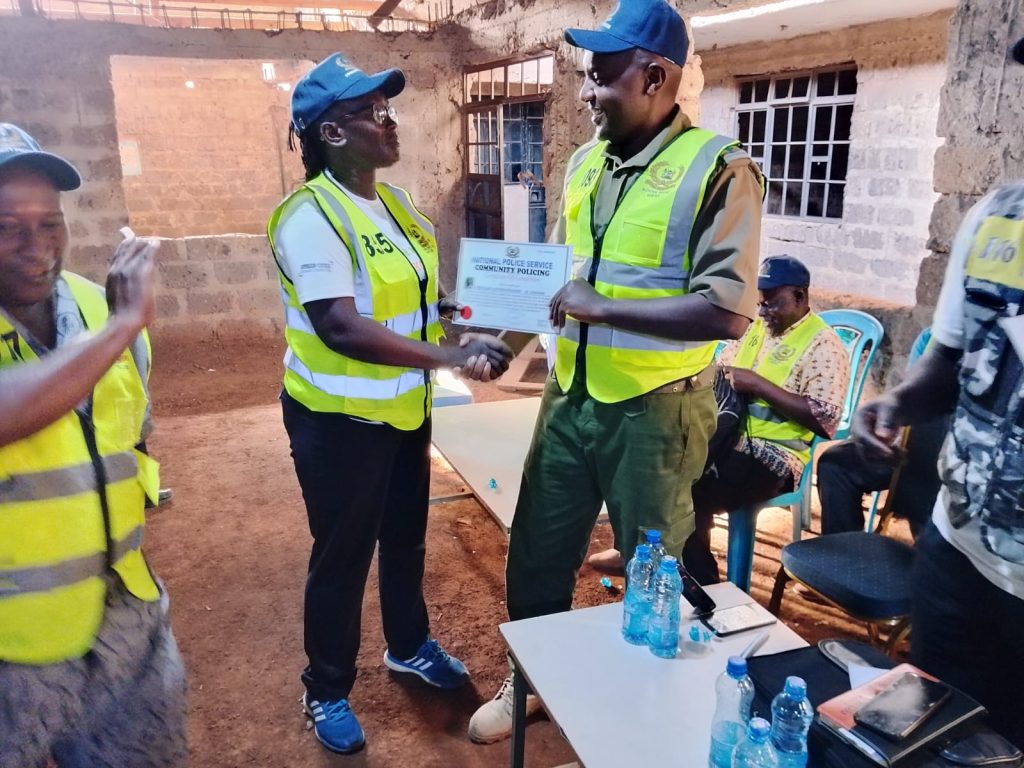
For most of its existence, Nyumba Kumi ran on barazas — in-person community meetings where residents and local chiefs gathered to discuss what was happening in the neighbourhood. That’s changing fast.
Residents increasingly use WhatsApp and Facebook groups to report suspicious activity, alert each other during emergencies, and organize neighbourhood patrols — a shift researchers have started calling “Digital Nyumba Kumi.” The numbers back up how much this actually helps: a study of the model’s performance in Suna West, Migori County, found that 54.7 percent of respondents agreed social media platforms improve communication between residents and law enforcement, and 53.4 percent agreed online platforms enhance public awareness of security issues. Kenyans.co.keKenyans.co.ke
The shift isn’t just about convenience — it’s about who actually shows up. Moving reporting online has made clusters more accessible to younger residents, who are far more likely to check their phones throughout the day than to attend a traditional in-person baraza. Local administrators and chiefs are adapting too, staying active in these groups so they can follow up on issues as they’re raised, rather than waiting for the next scheduled meeting. Kenyans.co.keKenyans.co.ke
This matters for how something like COMPOL is built. A cluster that only exists as a WhatsApp group risks becoming noise — updates lost in a scroll, urgent reports mixed in with chatter. But a cluster that only meets in person misses the residents who’d never come to a baraza but would absolutely send a message the moment something felt wrong. The strongest version of this model does both: it keeps the in-person trust of the traditional cluster, while giving residents a fast, low-friction way to actually use it when it counts.